
“Clean beauty” sounds reassuring.
It suggests safety, simplicity, and better choices for your skin. The problem is that the term itself doesn’t have a consistent definition.
There’s no universal standard that determines what qualifies as “clean.” Brands are free to interpret it in their own way, which is why two products labeled clean can be completely different in how they’re formulated.
If you’ve ever felt confused in the skincare aisle, that’s not on you. The language is designed to feel clear while leaving a lot open to interpretation.

Why “Clean” Doesn’t Mean the Same Thing Everywhere
Unlike terms that are tied to specific certifications, “clean beauty” is not regulated by a single governing body.
One brand might define clean as free from certain preservatives.
Another might focus on being plant-based.
Another might highlight sustainability while still using fragrance-heavy formulas.
All of those products can sit next to each other and carry the same label.
From a consumer perspective, that creates a gap between what you think you’re buying and what you’re actually using.
How This Impacts Your Skin
When definitions vary, consistency becomes harder to find.
You might switch to a “clean” product expecting it to be gentler, only to find that your skin still feels dry or reactive. That’s because the label didn’t tell you how the product was built, only how it was positioned.
Over time, this can lead to a cycle of trying new products without fully understanding why something works or doesn’t.
It also makes it harder to build a routine you can rely on.
What to Look for Instead
If the term itself isn’t reliable, the next step is focusing on things that are.
1. Ingredient transparency
You should be able to see what’s in your product without ambiguity. Clear labeling allows you to make informed decisions and notice patterns in how your skin responds.
2. Third-party standards
Independent certifications can add a level of accountability. Programs like EWG Verified set specific criteria around ingredient safety and transparency, which creates a more consistent benchmark.
3. How your skin feels after using it
Your skin gives you immediate feedback. A product that leaves your skin feeling comfortable right after use is a better signal than any marketing claim.
4. Simplicity in formulation
Products with fewer, more purposeful ingredients are often easier for your skin to tolerate and easier for you to understand.
Why Standards Matter More Than Labels
A label can say anything.
A standard requires a product to meet specific criteria.
When you start looking at products through that lens, it becomes easier to filter out noise. You’re not relying on how something is marketed, you’re paying attention to how it’s built and how it performs.
This is especially important for products you use every day.
Where to Start
Your cleanser is one of the most consistent points of contact with your skin, which makes it a good place to focus.
The Butter & Lye Turmeric Face and Body Bar is a strong example of what it looks like when a product meets a defined standard. It is EWG Verified, which means the formula has been reviewed for ingredient safety, full transparency, and avoids ingredients of concern based on current scientific research. Beyond the certification, it cleans effectively without leaving your skin feeling stripped, which makes it easier to maintain softness over time.
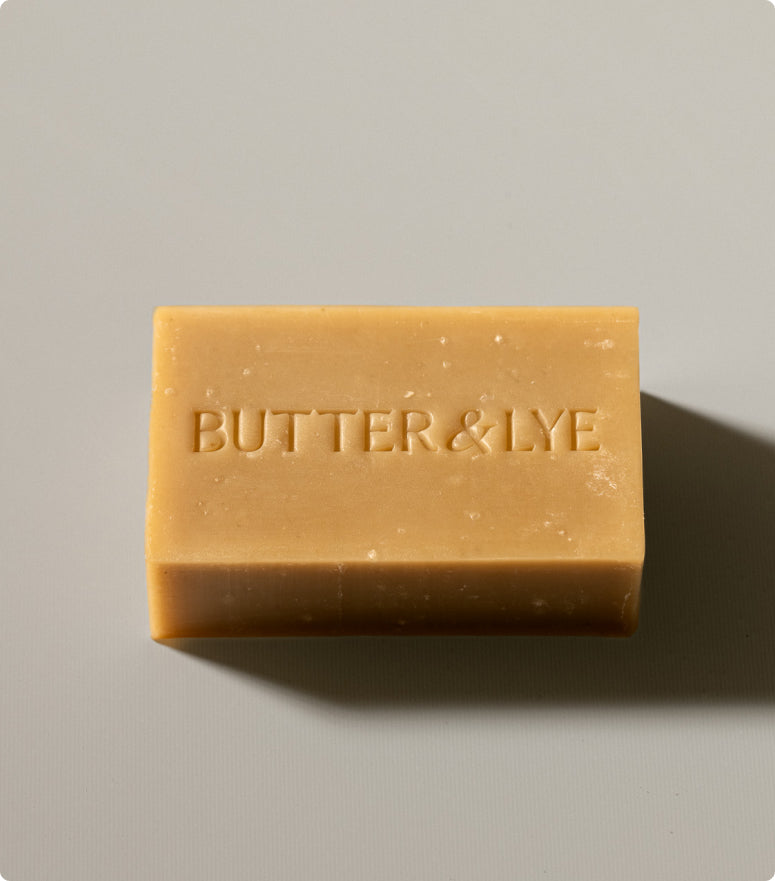
If your skin leans more combination or you want something that feels balanced year-round, the Butter & Lye Purple Clay Soap is another option. It offers a thorough cleanse while still supporting your skin’s overall comfort.

Starting with one product makes it easier to see how your skin responds without introducing too many variables at once.
What Changes When You Focus on the Right Things
When you move away from broad labels and focus on standards, your routine becomes easier to manage.
You’re less likely to cycle through products, and more likely to stick with what works.
Your skin tends to feel more consistent, because you’re no longer introducing products based on how they’re marketed, but on how they’re formulated.
The Takeaway
“Clean beauty” as a term isn’t going away, but it doesn’t offer much clarity on its own.
Looking at transparency, standards, and how a product actually performs will give you a better foundation for building a routine that works.
Once you understand what to look for, the process becomes a lot more straightforward.
Shop Our All-Natural Favorites: